


Praised for having one of the highest densities of biodiversity in the world, Costa Rica consistently tops the charts for wildlife travellers. Despite covering just 0.03% of the planet, it’s home to 6% of all known species.
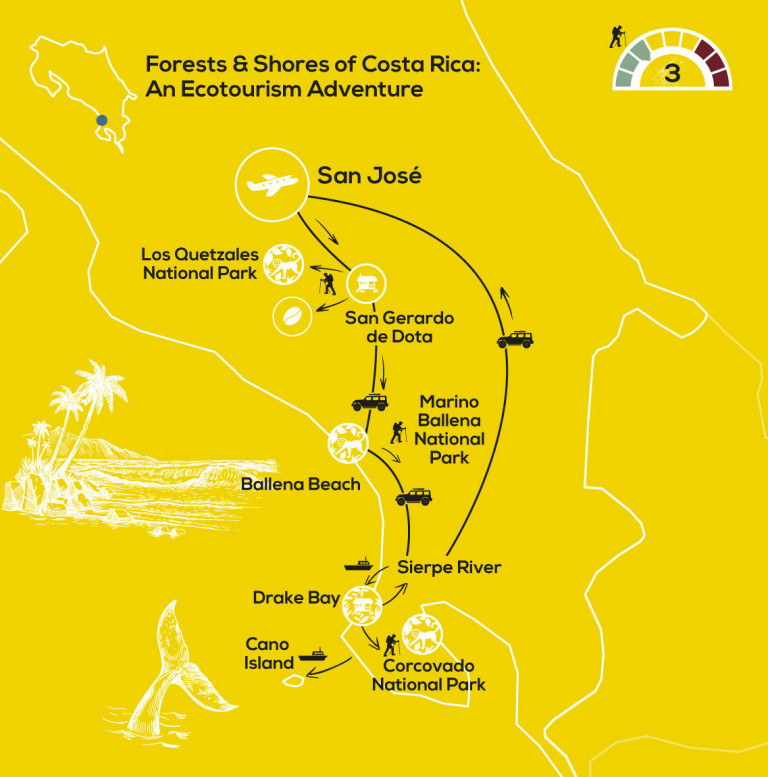
Most travellers follow a well-trodden path to hotspots such as Manuel Antonio National Park and Monteverde Cloud Forest Reserve, but the country’s true treasure is often overlooked. Bounded by the Pacific Ocean to the west and the fjord-like Golfo Dulce to the east, the Osa Peninsula has an astounding concentration of flora and fauna. Nurturing 2.5% of the globe’s total biodiversity, it’s been described by National Geographic as “the most biologically intense place on Earth”.

A third of the peninsula is covered by Corcovado National Park. Established in 1975 to protect one of the world’s last remaining Pacific lowland tropical rainforests from threats of logging and agriculture, it was the first park in the country to be designated entirely on ecological and scientific merits.
A strict cap on visitor numbers, mandatory local guide rules, and remote geography keep the habitat remarkably pristine and protected from human interference and it receives far fewer visitors than other major national parks.

What are the marine marvels?
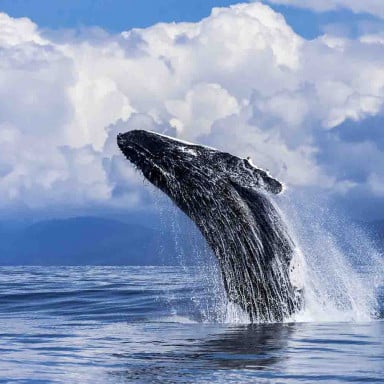
The warm waters of the Golfo Dulce and nearby Caño Island provide breeding and birthing grounds for humpback whales. Remarkably, there are two major migrations. The southern hemisphere or Antarctic population arrive from late-July to November. A month later, in December, the northern hemisphere population begin their journey which last until April. Most whale watching boat tours depart from Drake Bay.

Multiple species of turtles also nest along the coastline. The most commonly seen species are Olive Ridley (September to December) and Pacific Green (December to March). Lying off the coast of the peninsula, Caño Island Biological Reserve is the best place for year-round snorkelling and scuba diving, with chances to spot sea turtles, reef sharks, and rays.

What can you see in the jungle?
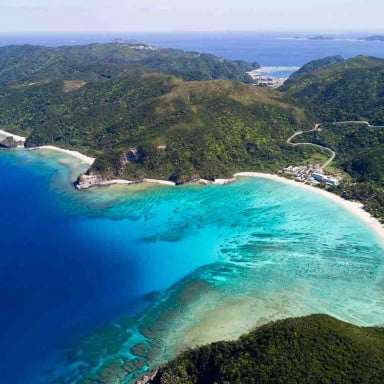
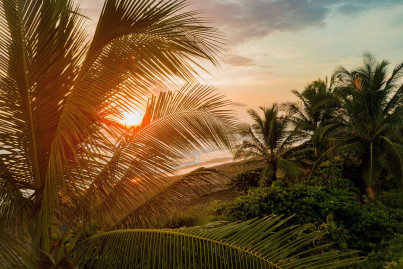
Pacific lowland tropical old-growth rainforest dominates the park interior, with royal mahogany trees towering 60 metres tall. Large, woody lianas dangle from branches and giant ferns fan from large buttress roots. Other ecosystems include low-altitude cloud forests, flooded swamp forests and mangroves. Thick jungle eventually opens onto wild Pacific beaches, freshwater lagoons and winding river estuaries.
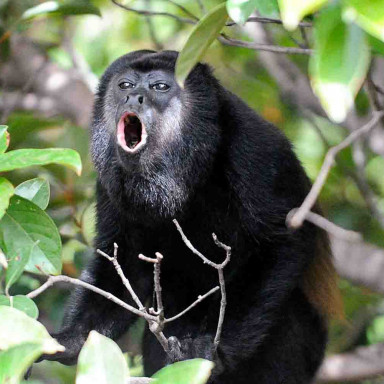
Corcovado has over 140 mammal species, 370 bird species, 117 amphibians and reptiles and 6,000 insect types. It is one of the only places in Costa Rica where you can see all four native monkey species: the squirrel monkey, spider monkey, white-faced capuchin and howler monkey.

Although the park’s big cat populations – including jaguars and pumas – are elusive, the highest chance of spotting them is at dawn or dusk. The jaguarundi moves in daylight hours, from mid-morning until late afternoon.
This is also the place to find the country’s largest population of wild scarlet macaws. Other feathered highlights include the sloth-hunting harpy eagle and the aptly named resplendent quetzal, known for its iridescent emerald plumage and long tail feathers.