

Almost every day there is cause for celebration in Bhutan, a nation which famously hosts up to 200 festivals per year. From honouring Buddhist leaders to dancing naked by candlelight, or rejoicing at the winter arrival of black-necked cranes from the Tibetan Plateau, each event has a specific focus. But these "tshechus" all serve a common purpose of binding the nation’s spiritual, social and cultural identity together.
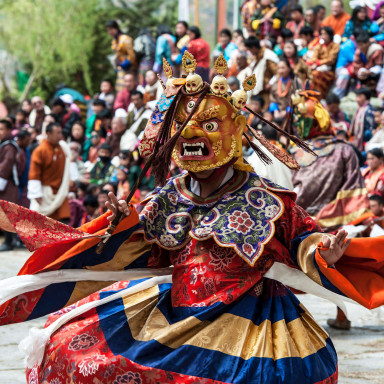
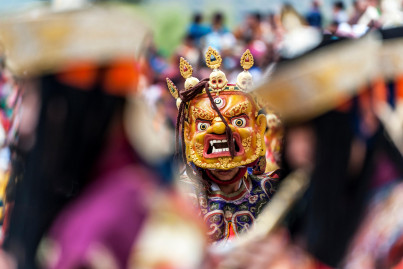
Watching colourful masked dancers swirl in the grounds of historic fortress buildings or against the backdrop of Himalayan mountain peaks is an unforgettable spectacle.
But how can you choose which festival is best for you?

Paro Tshechu
Best for colour and dance
What: Held to honour Guru Rinpoche, the 8th-century master who introduced Tantric Buddhism to Bhutan, this is one of the country’s largest festivals. It’s also one of the easiest to reach given its proximity to the nation’s primary international airport.
When:Traditionally held each spring (around March or April) before the farming season begins to give local communities a chance to cleanse their sins and pray for a good harvest. Dates differ year by year, depending on the lunar calendar.
Why: Masked dancers and spiritual rituals are balanced with light-hearted comedy performances by jesters known as atsaras. The highlight of the event is the unfurling of the Thongdrel, a silk tapestry depicting Guru Rinpoche and his manifestations. After a long night of prayer, the artwork is unveiled at dawn against the backdrop of the 17h century Rinpung Dzong. According to legends, simply setting eyes on it can wash away a person’s sins. The event is a pilgrimage for many families and merchants, who travel long distances in their finest dress to attend.

Black-necked Crane Festival
Best for nature
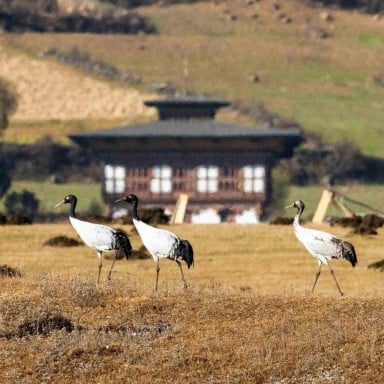
What: An environmental and cultural celebration to herald the arrival of endangered black-necked cranes from the Tibetan Plateau and to raise awareness for their conservation. Every winter, these high-flying birds gather in the Phobjikha Valley on the western slopes of the Black Mountains.
When: November 11 to coincide with the birthday of the Fourth King of Bhutan.
Why: Although traditional dances and folksongs form part of the show, conservation is at this festival’s core. Community members create short plays about protecting wetland habitats and schoolchildren dressed as cranes perform an elegant dance. The majestic birds have always been revered in Bhutanese culture as heavenly messengers and symbols of longevity, prosperity and harmony. According to tradition, the migration of these magical flocks begins and ends when they circle the Gangtey Monastery three times.

Royal Highland Festival
Best for tradition and adventure
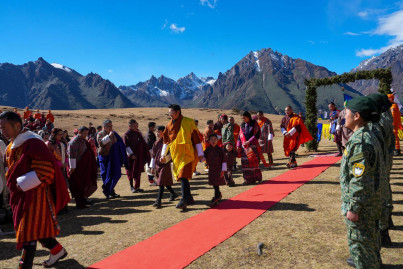
What: Initiated in 2016 by Bhutan’s King Jigme Khesar Namgyel Wangchuck, this festival was launched to preserve nomadic mountain culture and support the livelihoods of highland communities through a series of games and displays.
When: Every year from 23 to 24 October in the remote high-altitude village of Laya, 4,000 metres above sea level.
Why: Think of this as a Himalayan Highland Games or mountain Olympics. Competitions include archery, strongman matches and a 25km cross-country race. The infamous animal beauty contests always draw a big crowd. Yaks, horses and Mastiff dogs are adorned with expensive fabrics and bells to boost their good looks much to the amusement of onlookers. Layap women dressed in conical bamboo hats serve local cuisine from tents made of yak hair and you are guaranteed to spot members of the royal family amidst the throng of spectators, with the chance to meet with them also.

Thimphu & Gangtey Festivals
Best for splendour and variety of dances
What: Bhutan's Thimphu Tshechu and Gangtey Tshechu both celebrate Guru Rinpoche (Padmasambhava), the 8th-century tantric master who introduced Vajrayana Buddhism to Bhutan. However, each festival carries its own distinct historical and regional focus.
When: Timings differ every year (in 2026 these were in September) but in 2027 they fall on10th -12th October in Thimphu & 13th -15th October in Gangtey.
Why: These festivals can be conveniently be combined in the same trip to Bhutan. At the Thimphu Tshechu, watch elaborate sacred mask dances (Chham) performed by monks and laymen whilst comic relief and crowd interaction is provided by the by red-masked jesters (Atsaras). Gangtey Tshechu celebrates the sacred legacy and visit of Pema Lingpa—considered an incarnation of Guru Rinpoche—and the 1613 founding of Gangtey Monastery by his grandson Gyalse Pema Thinley. Watch the sacred Peling mask dances unique to the Gangtey valley, concluding with the Nguedup Langwa spiritual blessing ritual for wisdom and power.
Please note; the 2027 departure can be combined with our preceding Tibet's Lhasa to Everest Base Camp Adventure.