
Sporting events are a powerful tool for bringing communities together; the current World Cup tournament and recent Wimbledon Championship are testament to the fact. But beyond the neatly mowed lawns of Centre Court and pristine grass pitches of global stadiums, there are far more exhilarating playing fields. The Kyrchyn Gorge and lakeside Cholpon-Ata Hippodrome are scenic settings for this year’s highly sought after and well publicised Nomad Games in Kyrgyzstan.
More impressive, however, is a high-altitude contest of cultural significance few people know about. It’s an electrifying event celebrating strength, agility and heritage with some surprising elements. Beyond witnessing fiercely contested disciplines against a mountain back-drop, there’s a once in a lifetime chance to rub shoulders with a real-life king.
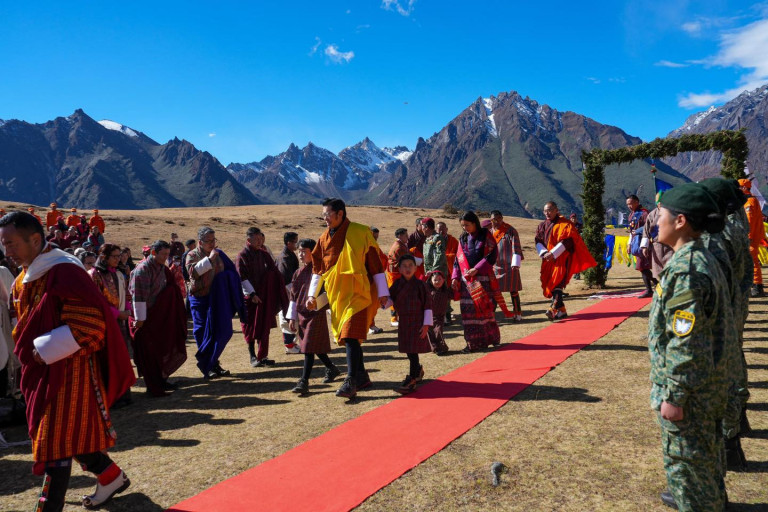

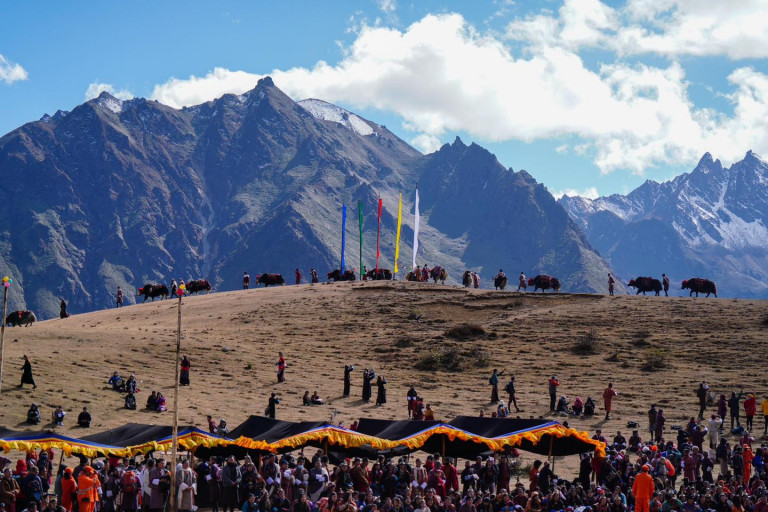
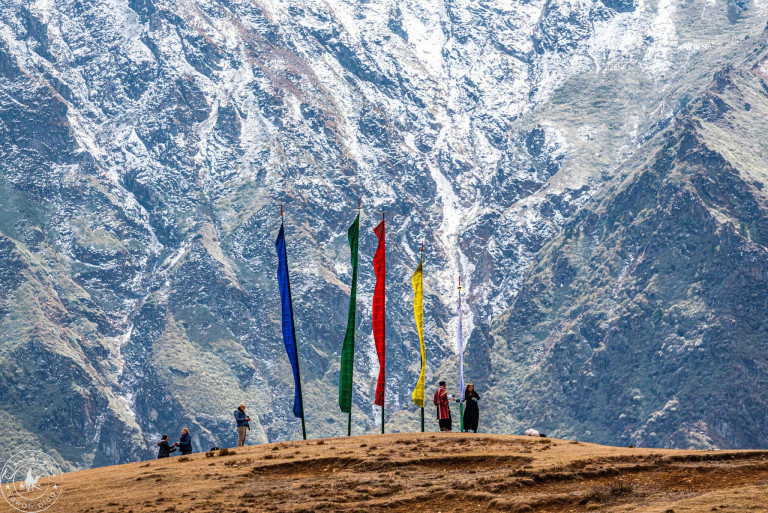
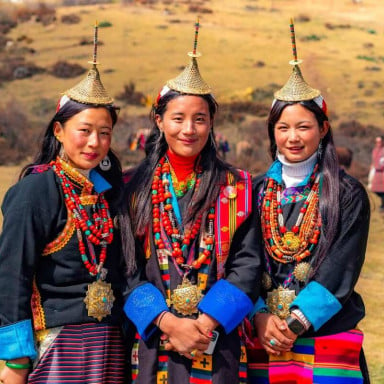
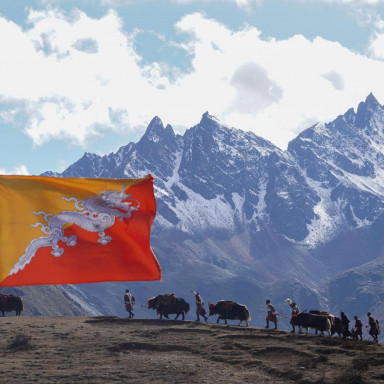
Founded in 2016, Bhutan’s Royal Highland Festival is an annual two-day celebration of traditional sports, animal shows and cultural performances highlighting nomadic mountain communities. Held in the remote north-westerly Gasa region - almost 4,000 metres above sea level in the country’s highest permanent settlement, Laya – it can only be reached by a 4WD journey and hike.

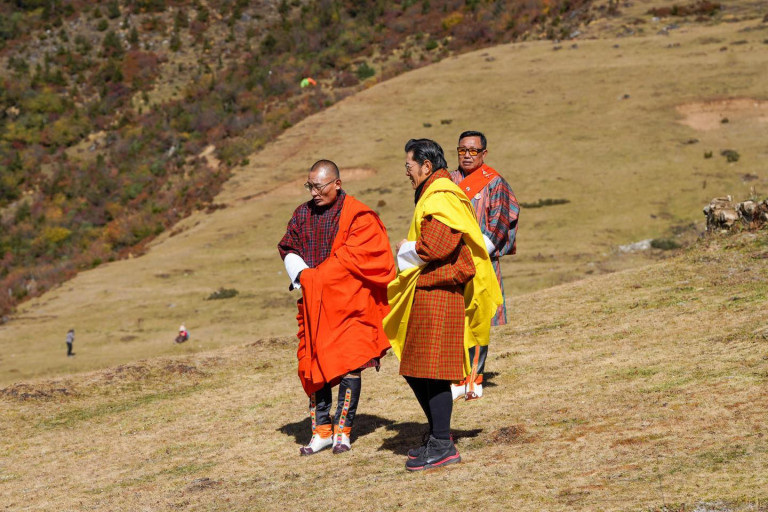
A bit like Scotland’s Braemar Games, it was founded by a monarch and is attended by the nation’s royal family. But while it’s extremely unlikely you’ll ever bump into Charles and Camilla at the sporting event held on the doorstep of their annual summer estate Balmoral Castle, in Bhutan there’s every chance King Jigme Khesar Namgyel Wangchuck might pull up a pew in the spectator stand.

Ascending the throne at the young age of 26 – making him to the world’s youngest monarch at the time – King Jigme is known for his progressive and youthful manner. Often seen wearing a pair of trainers with the traditional Bhutanese gho, he’s known for walking around the festival grounds and greeting people, accompanied by his glamourous wife Queen Jetsun Pema. Frequently dubbed the ‘Willian and Kate of the Himalayas’, the couple count Prince William and the Princess of Wales amongst their friends.
The relationship between the Bhutanese people and their royal family is fascinating. The king’s father relinquished many of his powers and initiated a shift to a democracy – a process finalised by his son. Yet, loyal subjects still look to their royals for guidance and can often be seen proudly sporting a pin badge of Oxford University educated Jigme’s face fastened to their clothing.
Not yet convinced of why the Royal Highland Games is worthy of a royal audience? Here are a few more reasons to attend…
- There’s a chance to witness various traditional disciplines, including Bhutanese national sport archery, horse racing, yak racing and “strongman” events such as pungdo (stone put), soksom (javelin) and dekor (discus).
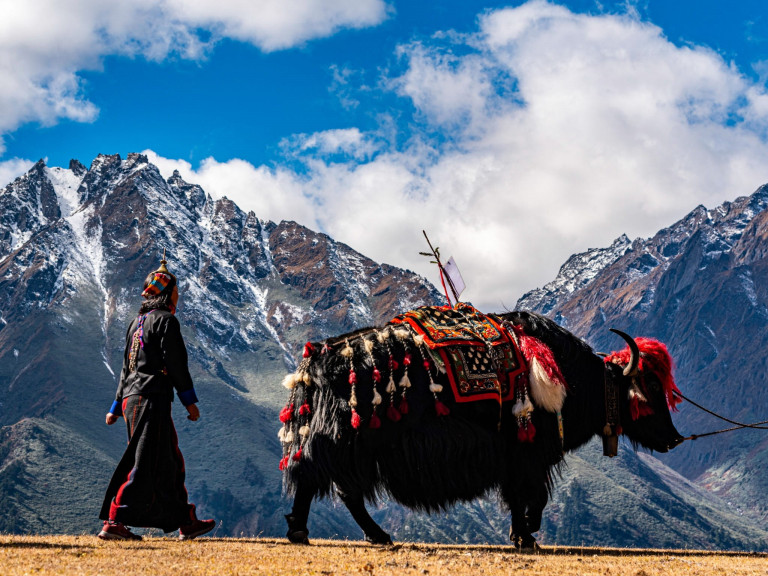
- Another spectacle is the animal parade. Herders share a deep connection with their livestock as a source of livelihood and a focus for spirituality. Judges rate the strongest bull and the healthiest calf. There’s also a beauty contest for the best-dressed yak.
- Find stalls selling dried yak cheese, butter, and local alcoholic beverages, alongside textiles, souvenirs and medicinal herbs.
- After sunset, everyone gathers around a bonfire to sing folk songs, dance and share conversations.
- Leya is home to the household that first hosted Tibetan Buddhist lama and founder of modern Bhutan Zhabdrung Rinpoche in 1616 when he arrived in the country during self-imposed exile. The family still displays gifts he gave them, including pots and precious stones.
- The event is not easy to access and has been witnessed by only a few. Foreigners require a restricted area permit arranged through a licensed tour operator.