


Exciting plans ahead for Africa's most desirable emerging destination
In a world so well-travelled, it’s refreshing to know there are still so many places to discover. One destination that everyone seems to be talking about at the moment is Angola. Seemingly out of nowhere, the once secretive nation is on a fast track to becoming one of Africa’s hottest prospects for travellers with a thirst for discovery.
In 2025, 223,140 internationals visited the destination - a 28% increase from the previous year - and the country has collected several industry awards including a Wanderlust magazine recognition for Most Desirable Emerging Destination at the World Travel Market trade show in London last week.
[Photo: A Mwila woman in Angola - Credit Sarah Marshall]

In an interview with Yellowwood, Angola’s Secretary of State for Tourism Josemar Euclides João Afonso admitted his country has no time to waste. He firmly believes Angola has a lot to offer which makes it distinctly different from neighbouring nations.
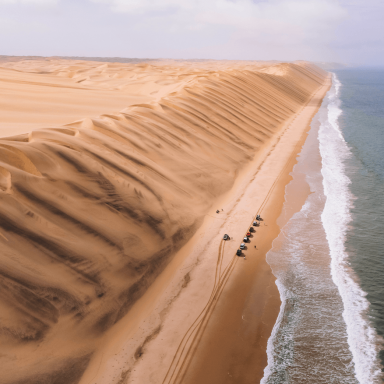
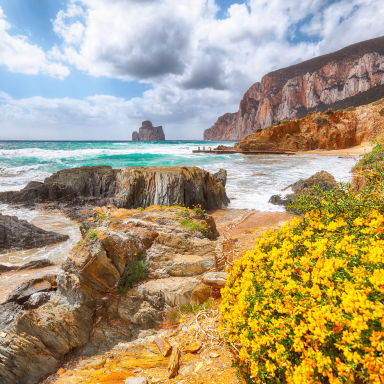
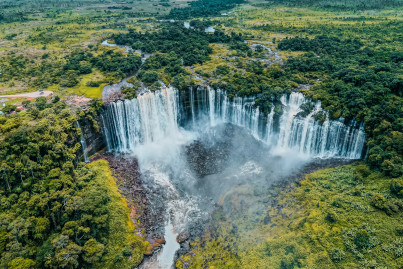
The sheer variety of landscapes alone is astounding. Along the southern coastline, the Atlantic Ocean laps sand dunes rising from the 80-million-year-old Namib Desert; in the highlands, mountain plateaus and dramatic escarpments are woven with hiking trails.
[Photo: Angola’s Secretary of State for Tourism Josemar Euclides João Afonso - Credit Angola Tourism]

The government has identified 29 major sites for immediate investment, including the ghost settlement of Baía dos Tigres offshore from Iona National Park in the Namib Desert. Surprisingly little is known about the former fish factory established during Portugueses colonial rule. After a storm cut off an essential water supply, the site was abandoned and a church, hospital and cinema theatre have since been swallowed by sand. The scant evidence available suggests Angolan workers in the factory were employed under an exploitative system of forced labour – a form of legally legitimate slavery – making it a deeply important site in the country’s history.
Afonso admits Angola’s history is little known and largely distorted by European-centric interpretations – something he learned during a period spent living and studying in Lisbon, Portugal. Eager to make adjustments, he insists stories must be told through Angolan voices.
“Our heritage, our history, our tradition, our way of seeing the world is part of our programme. We want to protect it and make sure that we have more Angolans talking about our history from our perspective,” he said.
[Photo: Baía dos Tigres - Credit Sarah Marshall]

A sudden shift into tourism has been driven by a desire to reduce reliance on oil as the country’s main source of income and to provide more job opportunities for Angolans. The government has launched programmes to train guides, hotel staff, restaurant workers and even police officers to ensure the experience for tourists runs as smoothly as possible. Afonso confirmed the government is working towards creating an official guide certification under the banner of Visit Angola.
“We are looking for partners to create a framework in order for us to make sure that the experience in the tourism sector in Angola is aligned with international standards and aligned with our own identity as a nation,” he said.
Investment will also be made into improving road networks, flight routes and building hotels.
Eco-tourism has been highlighted as another key area of focus. A considerable amount of wildlife was lost during 27 years of civil war, but numbers are now rebounding. In Iona National Park, managed by non-profit organisation African Parks, 27 Angolan giraffes were successfully translocated from Namibia in 2023 and 2024. This August, the first calf was born – a milestone event meaning the population is now viable – and the first lodge opened inside the park. There are now plans to bring more giraffe and zebra.
[Photo: Iona National Park - Credit Sarah Marshall]

Another area of note is Luengue-Luiana National Park in southeastern Angola, now managed by The Peace Parks Foundation. Bordering the Caprivi Strip (officially renamed the Zambezi Region of Namibia), it connects with Namibia and Zambia to form an important wildlife corridor. In July, Angola’s first tented safari camp Luiana Plains Expedition Camp opened in the park. Sightings include big cats, wild dogs and some of Africa’s last mega-herds of elephants up to 500-strong.
Recognising the importance of these areas and a need to support surrounding communities, Afonso has committed to establishing a series of concessions around the park and in the surrounding Cuando province – an area he envisages becoming “an ecotourism capital”.
“Our main goal is to erase this talk about Angola as a potential,” he stressed. “We don't want to try to replicate Namibia or Botswana. No, we want to be proudly emboldened as a reference in Africa.
“We have the landscape, we have the savannah, the desert, we have the people. Now we need to build on that.”
[Photo: Welwitschia Mirabilis - Credit Robert Haidinger, Copyright Angola Tourism Board @ Kleber Group]