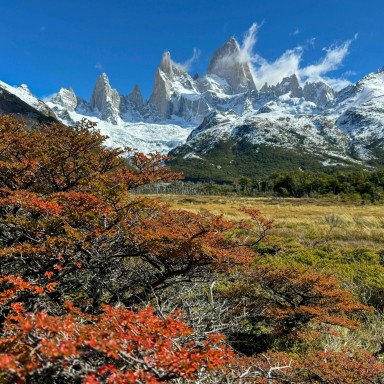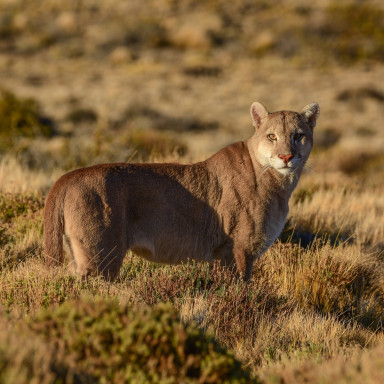



Cougar, mountain lion, panther, catamount, pampas cat. The puma holds a place in the Guiness Book of Records for the land mammal with the greatest number of names. Spanning the entire continent of the Americas, their distribution is vast. But even though they are categorised as being of Least Concern on the IUCN list of endangered species, populations have been under threat in multiple locations – especially in Patagonia.
Seen as a threat to livestock, the cats have historically been a target for gauchos (cowboys) and estancia owners. Although the feline has been protected by law in Chile since 1980, in certain provinces of Argentina it is still legal to hunt them.
But attitudes towards the species are slowly changing, and it’s largely down to tourism. Multiple studies and field observations have shown a steady increase in numbers over the last few years. A scientific paper recently published in Royal Society Journals reports the highest density ever of the big cat has been recorded.

Following the establishment of Monte León National Park in the southeastern coastal region of Argentina’s Santa Cruz Province, a density of 13.2 cats for every 100 square kilometers (38 square miles) has been recorded.
Along with GPS data, another unexpected event proves populations are recovering. Pumas have been caught on camera hunting Magellanic penguins. Studies show pumas have killed over 7,000 penguins between 2007 and 2010, sometimes engaging in "surplus killing" where birds are killed but not eaten. A team of researchers working with NGO Fundación Rewilding Argentina installed 32 camera traps across the park and tracked 14 adult pumas (Puma concolor) with GPS collars between September 2019 and January 2023.

Further north-east, within the same Santa Cruz province, pumas are also bouncing back within the boundaries of Patagonia Park. Following a trend set in Chile’s Torres del Paine National Park, former leoneros (puma hunters) are recognising the value of puma tourism.
Tracker Facundo Epul represents a new younger generation of gauchos with a passion for protecting the species. After seeing his first puma as a teenager, he became fascinated by the animal and began accompanying the Rewilding Argentina team on fieldwork expeditions.
Now he takes tourists to see the cats and will be one of the local guides leading a segment of our new Argentinian Patagonia tour.

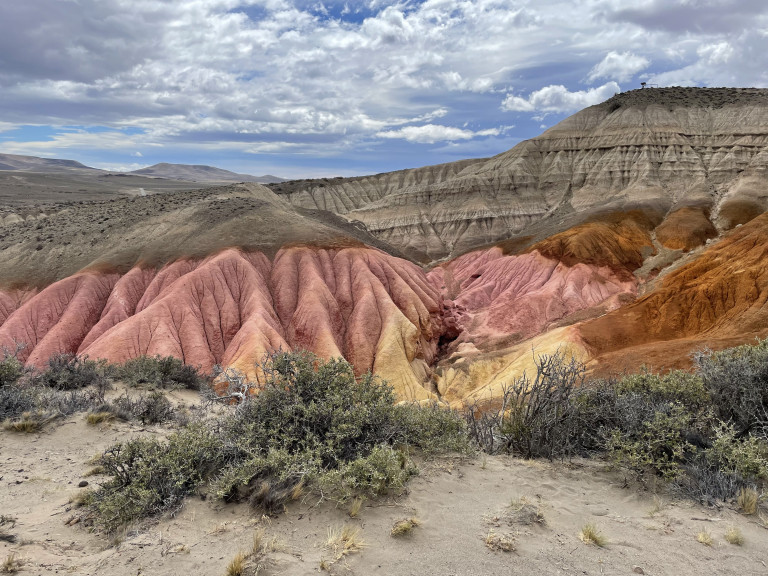
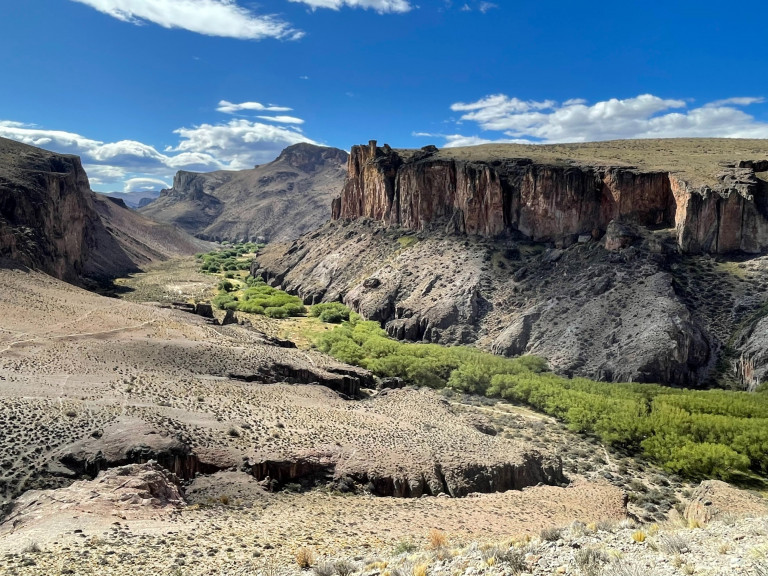
Puma tracking forms part of a broader itinerary exploring one of the region’s most exciting yet lesser-known protected areas, Patagonia Park. Along with observing pumas on foot, there are opportunities to hike through colourful rock formations and marvel at the ancient handprint petroglyphs at the Cueva de las Manos.