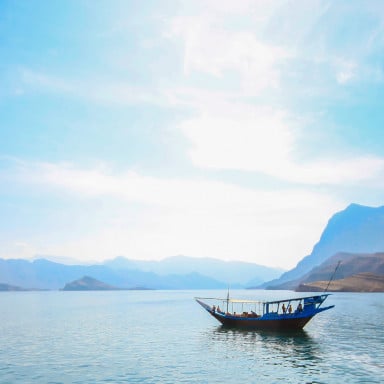


Often positioned as the authentic, pared back antithesis to its glossy neighbour Dubai, Oman has always been praised for its nature. From the rugged mountains of Jabel Akhdar to the wildlife-rich coast of the Musandam Peninsula, the variety of landscapes has always been a big draw for tourists.

Realising the potential of their greatest asset, the Sultanate has ramped up protection for the environment and set out a series of bold ambitions for 2026 as part of its Oman Vision 2040, with a goal of achieving net zero by 2050. A ban on plastic bags and a commitment to planting 100 million mangrove trees are already in effect, along with an Artificial Coral Reefs Project to restore degraded reefs and increase fish populations.
Future plans include investing in green energy and the development of sustainable urban areas such as the Yiti – a new carbon neutral district in Muscat with solar-powered rooftops, electric transport, and wastewater recycling systems. Data from an extensive Whale and Dolphin Project is also being used to inform a new national strategy to protect marine mammals.

Oman has 31 nature reserves, covering nearly 15,000sqkm. Here are our top five wild spots:
1 - Daymaniyat Islands Nature Reserve: This archipelago is a protected UNESCO site famous for its frequent sightings of whale sharks (July–September) and hawksbill turtles.

2 - Jebel Shams & Wadi Ghul: Known as the Grand Canyon of Arabia, this area features the highest peak in the country at approximately 3000 meters and offers astounding vertical drops.

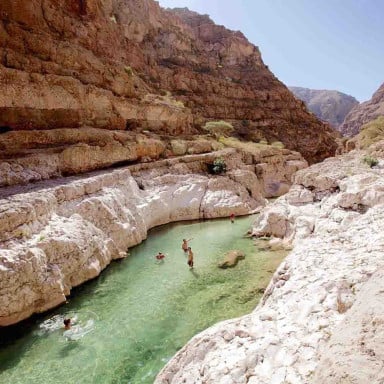
3 - Wadi Shab: A dramatic river canyon featuring turquoise freshwater pools, terraced plantations, and a hidden waterfall accessible only by swimming through a narrow cave.

4 - The Dhofar Region (Salalah): A unique ecosystem that transforms into a lush green paradise during the Khareef (monsoon) season, providing a habitat for the rare Arabian leopard.

5 - Ras Al Jinz Turtle Reserve: One of the most important nesting sites in the world for the endangered green sea turtle, where visitors can witness nesting and hatching year-round.