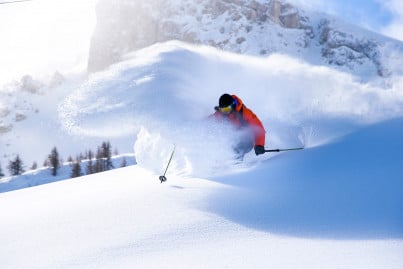

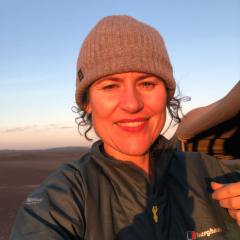
Athletes are currently blasting a snowstorm at the 25th Winter Olympics in Milan-Cortina, getting the rest of excited about squeezing in a last-minute trip to the slopes. But seeking pleasure on the pistes isn’t all about racing down hair-raising black runs. Ski touring guide Dale Williams (pictured below) explains why slow and steady spring skiing can be infinitely more enjoyable.

What initially attracted you to ski touring?
Honestly? Silence. My first ski tour was in the Hautes-Alpes, skinning up before dawn while the villages were still asleep and the only sound was my breath and the snow under my skis. That moment changed everything. Ski touring isn’t about chasing lifts or ticking pistes - it’s about earning your turns and feeling the mountain wake up around you.
Over time, touring became my way of connecting to these mountains properly - the old shepherd paths, forgotten cols, lines skied long before resorts existed. In places like Piemonte, where touring is deeply woven into local life, it feels less like a sport and more like a tradition passed down quietly, generation to generation.

What are the benefits of this type of holiday versus a traditional downhill ski trip?
Freedom. Depth. Authenticity. With ski touring, you step outside the infrastructure. No queues, no noise, no crowded pistes. You move through wild terrain at nature’s pace, choosing your line, adapting to conditions, and feeling genuinely present.
It’s also far more immersive. You don’t just ski a mountain — you cross it, read it, respect it. And at the end of the day, instead of après-ski chaos, you’re sharing local wine in a family-run rifugio or auberge, eating food that belongs exactly where you are.

How do you build itineraries for a ski tour trip – what are you looking for?
Every itinerary starts with the snow and the season, not a fixed plan. The mountains decide — we listen. I look for safe, elegant lines that suit the group’s ability and natural flow of valley to col to descent - not just isolated routes. Weather patterns and sun exposure are also important, along with cultural anchors - villages, refuges, places with stories.
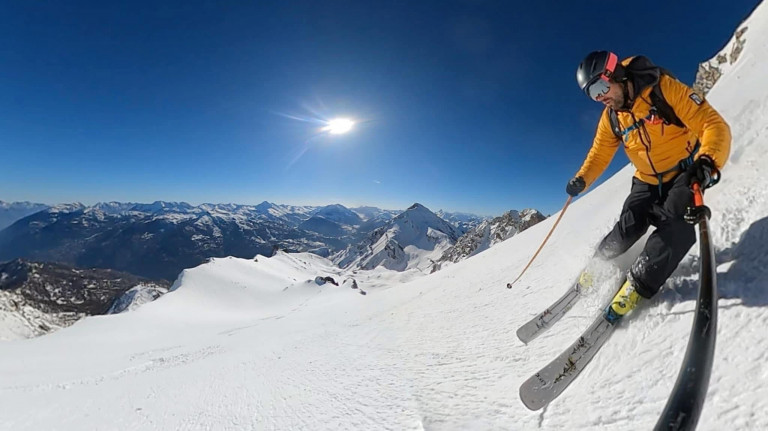
In the Hautes-Alpes, that might mean long, glacial-style descents with huge alpine views. In Piemonte, it’s often quieter terrain, playful tree skiing, and routes that end in tiny stone villages where lunch matters just as much as the skiing.

Beyond the slopes, what is so special about the French and Italian Alps?
These mountains are lived in, not just visited. In the French Alps, especially the southern ranges, you feel the blend of alpine and Mediterranean life — sun, simplicity, resilience. People know their mountains intimately.
In Piemonte, the culture is deeply human. Touring days often finish at a long table, not a bar. There’s pride in local cheese, in hand-written menus, in routes that don’t appear on Instagram. The Alps here aren’t a backdrop - they’re a companion.

What are the benefits of booking a spring ski trip?
Spring is when ski touring truly shines. The snowpack is stable, conditions are more predictable and there are longer days with softer light and warmer temperatures. The corn snow typically found at this time promises smooth, forgiving, joyful skiing. Spring touring is also more social and more relaxed. You can ski big terrain without winter’s intensity, and the mountains feel generous rather than severe.

What level of ability to do a ski tour trip?
You don’t need to be extreme – just comfortable and curious. A solid parallel turn on red pistes is usually enough to start. Fitness matters more than bravado, and mindset matters most of all. Touring is about pacing yourself, listening, learning, and trusting the process.
We build skills as we go - movement, efficiency, snow awareness. Many people discover that ski touring doesn’t just improve their skiing, it changes how they experience the mountains entirely.