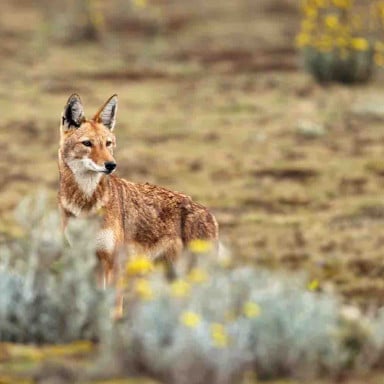



Around 4,000 metres above sea level in a landscape dotted with towering lobelia plants, the world’s rarest canid is fighting for survival. Listed on the IUCN Red List of Threatened Species as Endangered, there are fewer than 500 Ethiopian wolves left on this planet making it Africa’s rarest carnivore. An estimated 200-300 individuals live in the Ethiopia’s Bale Mountains.

Sometimes nicknamed ‘Highland Gods’, they have become a popular quarry for photographers and wildlife enthusiasts. Remarkably, the lithe, fox-like creatures can be (relatively) easily observed on the Sanetti Plateau. “I see them every time when I go to the Bale Mountains,” says local guide Ayuba Ahmed. “I know where they live and how to see them. I used to work with a conservation project monitoring them, so I have a lot of experience with their movements.”

Beyond being a joy to observe in the wild, the Ethiopian wolf is a key component within the fragile Afroalpine ecosystem of the Bale Mountains. At the end of 2024, researcher Sandra Lai and the conservation organisation Ethiopian Wolf Conservation Programme published a paper in the journal Ecology detailing a unique and unusual feeding behaviour responsible for shaping Ethiopia’s high altitude ‘sky islands’.

Every May when rains return, Ethiopian red hot poker flowers unfurl from a withered state and provide a source of nectar used by generations as a medicinal plant, to sweeten coffee or serve on flatbread. Along with humans, it also attracts the sweet-toothed canids. While licking the delicious plants, their muzzles become dusted with pollen as they move from flower to flower leading to the hypothesis that the Ethiopian wolf could be an important pollinator. It is the first large carnivorous predator to be documented consuming nectar.
“Yes, I’ve seen this behaviour,” says Ayuba. “The best chance to see them drinking the flower is in May and June. I see it every year and I guide many photographers.”

According to the most recent field report shared by EWCP, who have been studying the species for 30 years, 2025 was a good breeding year. They recorded 52 pups across 14 packs, with 37 individuals surviving beyond their first few months.
The biggest threats to the wolves are disease and habitat loss. In the last few decades, there have been several outbreaks of canine distemper and rabies transmitted from domestic dogs. But efforts to vaccinate the animals are beginning to have a positive impact. Agricultural expansion and livestock overgrazing continue to have a damaging effect, which is why tourism projects benefitting communities are more important than ever.